




“Amma just doesn’t want to eat anymore.” I have heard some version of this sentence in almost every consultation involving an elderly patient with poor nutritional status. The family has tried — different foods, favourite dishes, gentle coaxing. The patient picks at the meal, eats a few spoonfuls, and stops. The family concludes it is stubbornness, or withdrawal, or just “old age.”
What they are usually looking at is a clinical problem with a specific cause. Sometimes more than one. And most of those causes are addressable — not perfectly, but meaningfully — once you know what you are dealing with.
The “anorexia of ageing,” as it is sometimes called in the literature, is real. But it is not one thing. It is a collection of physiological changes, medication effects, social changes, and micronutrient deficiencies, each of which contributes to the overall picture of an elderly person who does not want to eat. Treating it as a single problem — or as no problem at all — means missing most of it.

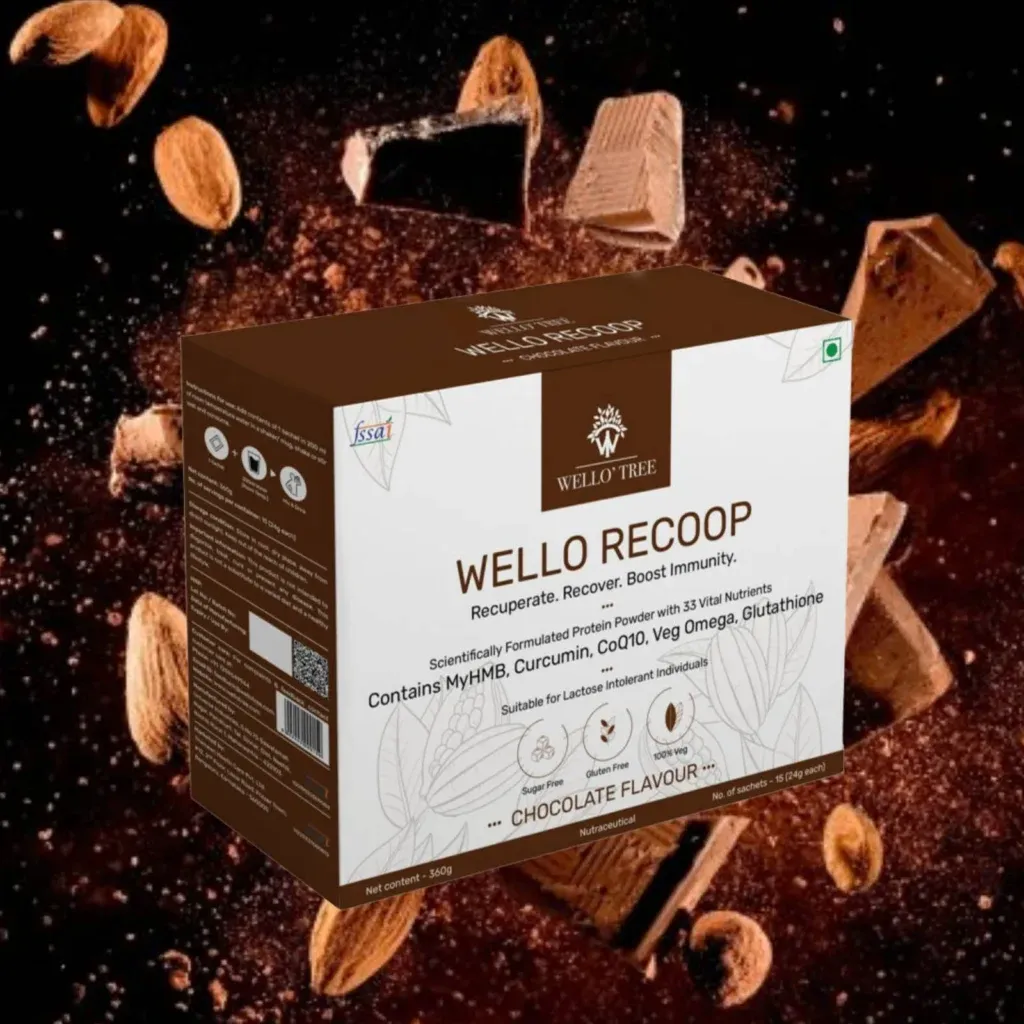
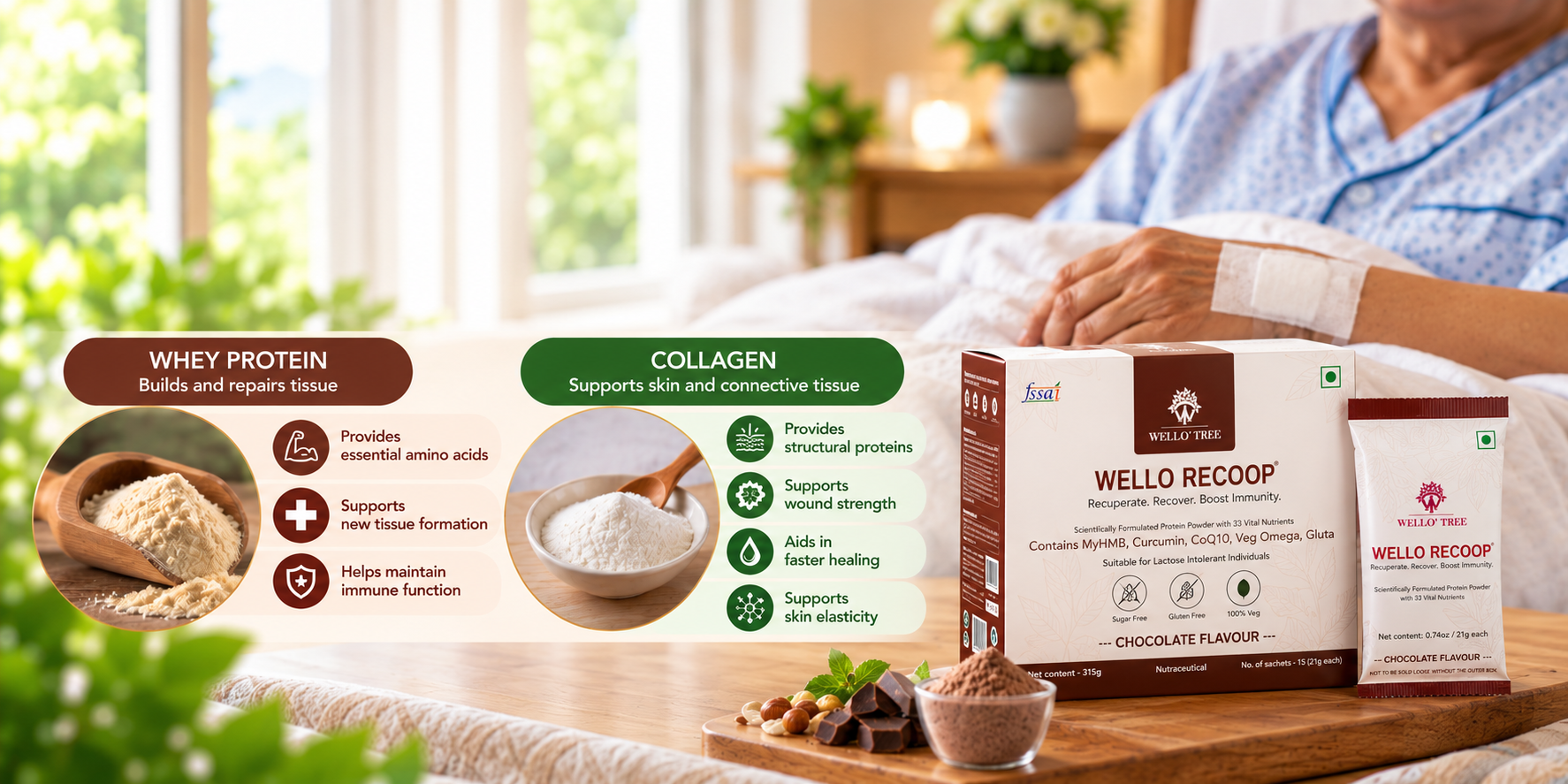
Wello Recoop is a diabetic-friendly, sugar-free recovery protein formulated with whey, pea, and brown rice protein plus HMB, CoQ10, curcumin, and probiotics.
Reduced Gastric Emptying
The stomach empties more slowly with age. The rate at which food passes from the stomach to the small intestine reduces, which means an elderly person feels full faster and stays full longer after a meal. This is not a diseased stomach — it is a normal physiological change. But the effect is that an 80-year-old who eats half the portion of a 40-year-old at lunch may genuinely not feel hungry at dinner, and is not being difficult about it.
Practically, this means large meals are not going to work. Five or six small eating occasions, with the total volume spread across the day, addresses this better than expecting the same three-meal pattern that worked at 50.
Loss of Taste and Smell
Taste and smell both decline significantly with age. By 70, many people have lost a meaningful proportion of their taste bud density and olfactory sensitivity. Food tastes blander. The pleasure response to eating diminishes. Meals that were enjoyable at 55 feel unrewarding at 75.
This drives appetite suppression in a way that is entirely understandable but deeply frustrating for families who cannot see it. The elderly person is not refusing food out of perversity. Food genuinely does not taste or smell the way it used to.
One clinical response to this is umami enhancement — adding foods that amplify savouriness without adding sodium in large amounts. A small amount of tamarind in sambar, a concentrated tomato base, or the natural glutamates in aged paneer and certain fermented foods can make the same dish more engaging for an elderly palate. It is not a cure, but it helps.
My elderly patient from Madurai, 78, had been refusing her lunch for weeks. When her daughter mentioned that the family had switched cooking oil brands — going to a more refined, odourless oil — and that nothing smelled the same in the kitchen anymore, that was probably part of the explanation. Small changes in the sensory environment of eating matter enormously when sensory sensitivity is already reduced.
Zinc Deficiency and Its Specific Effect on Appetite
This is the specific cause most families and many general practitioners miss. Zinc deficiency directly impairs taste perception — a condition called hypogeusia — which further reduces the already-diminished pleasure of eating. Zinc is commonly deficient in elderly Indians, particularly vegetarians, because plant-based zinc sources have lower bioavailability than animal sources, and because zinc absorption itself decreases with age.
Correcting zinc deficiency can meaningfully improve taste perception and, with it, appetite. This is not a large intervention. Zinc supplementation at clinically appropriate doses, or increased intake of zinc-rich foods like pumpkin seeds, sesame (til), whole grains, and legumes, can produce noticeable improvement in taste sensation within weeks. It is worth assessing zinc status in any elderly patient with persistent poor appetite.
Polypharmacy: The Appetite Thief Most People Don’t Name
Many elderly Indians are on five or more medications simultaneously — a reality of managing multiple chronic conditions in the same body. Certain common medications have appetite suppression as a direct or indirect side effect. Metformin (nausea, especially at higher doses). Certain ACE inhibitors (metallic taste). Digoxin (nausea, anorexia at higher levels). SSRIs (early satiety, nausea). Certain antibiotics. Some osteoporosis medications.
This is not a reason to stop medication without clinical guidance. But it is a reason to ask the prescribing physician whether any current medications might be contributing to appetite suppression, and whether dose timing or formulation changes might reduce this effect. A medication review specifically looking at appetite-related side effects is appropriate for any elderly patient with significant, persistent poor oral intake.
Depression and Social Isolation
Depression is significantly underdiagnosed in elderly Indian populations. It often presents differently than in younger adults — less often as sadness, more often as withdrawal, fatigue, and reduced interest in activities including eating. Eating alone, after a spouse has died or children have moved away, removes much of the social dimension that makes meals enjoyable. Appetite is partly social, particularly in a culture where food preparation and sharing are deeply relational acts.
An elderly person who has lost a spouse and now eats alone from a tiffin left by a helper has lost far more than a dining companion. They have lost the social scaffolding around mealtimes that made eating feel worth doing. This is a real contributor to appetite loss, and no nutritional supplement resolves it without also addressing the social and emotional dimension.
When depression is the driving factor, clinical management of the depression is the primary intervention. Nutrition support is important — adequate intake helps prevent the physical decline that depression can drive — but it is not the primary fix.
What Can Actually Help
Match meal size to physiology: smaller, more frequent. Use umami-rich, strongly aromatic foods to compensate for reduced sensory sensitivity. Check zinc status. Review medications with the prescribing physician. Address any social or emotional factors around meals. Ensure adequate protein in whatever volume the patient will accept — this is where a nutrient-dense supplement that can be taken in a small volume of water or milk, without requiring the patient to eat a full meal, has real clinical utility.
The goal is not to force a large appetite. It is to ensure that whatever the person is willing to eat or drink provides adequate nutrition for their needs. A small meal that is protein-dense and micronutrient-rich is worth considerably more than a large meal of refined carbohydrates and thin soup. Nutrition Supplements for Elderly Indians

Available in Chocolate and Mango flavours
FAQs
Not always, but it should always be investigated rather than dismissed. Common causes include physiological changes in gastric emptying and taste sensation, zinc deficiency, medication side effects, and depression. Occasionally poor appetite reflects a serious underlying illness. A medical review is appropriate if appetite loss is new, significant, or accompanied by weight loss.
Yes. Zinc deficiency directly impairs taste perception (a condition called hypogeusia), which reduces the pleasure of eating and contributes to appetite suppression. Zinc deficiency is common in elderly Indians, particularly vegetarians, and is often overlooked as a contributing cause of poor appetite.
Foods that are aromatic, warm, and umami-rich tend to be more appetising when taste and smell sensitivity have declined. Tamarind, tomato, ginger, and fermented ingredients like idli and dosa batter leverage the remaining sensory pathways better than bland preparations. Small portions, served attractively and at comfortable temperature, also help.
Quite possibly. Metformin, certain blood pressure medications, digoxin, some antidepressants, and antibiotics can all reduce appetite through nausea, altered taste, or early satiety as side effects. A medication review with the prescribing physician — specifically asking about appetite-related effects — is appropriate.
Weight loss of more than 5% over 3-6 months, or more than 10% over a year, warrants a medical review. Persistent refusal of all food for more than a few days, significant deterioration in energy or mobility, or any other new symptoms alongside poor appetite are reasons to seek clinical evaluation promptly.




Leave a Reply
You must be logged in to post a comment.