





The pharmacist at the neighbourhood medical store means well. When a diabetic patient asks for a protein powder, they typically reach for whatever is on the shelf at an appropriate price point — often a product they have been asked for before, from a well-known brand, in a flavour the customer will accept. What they rarely do is read the ingredient list together with the customer.
That ingredient list is where the problems live.
In 39 years of clinical dietetics practice, I have seen diabetic patients add protein supplements to their diet with the best of intentions and end up with worsening post-meal glucose readings that neither they nor their physician could initially explain. The culprit, almost always, is an ingredient that does not appear on the front of the pack.

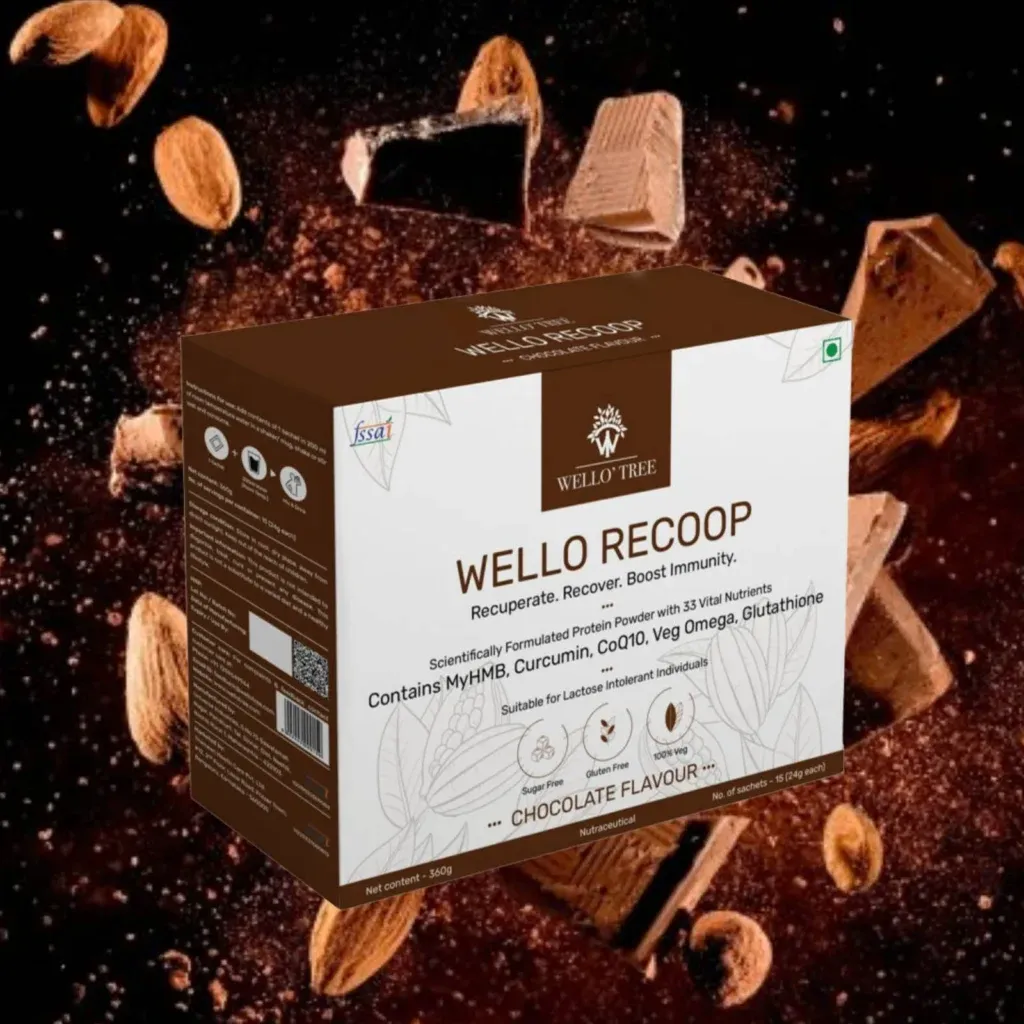
Wello Recoop is a diabetic-friendly, sugar-free recovery protein formulated with whey, pea, and brown rice protein plus HMB, CoQ10, curcumin, and probiotics.
The Hidden Sugars Problem
Protein powders are frequently sweetened and flavoured to improve palatability. The issue is what is used to do that. Maltodextrin is perhaps the most common offender. It is a processed carbohydrate derived from starch that functions as a bulking agent and sweetener. It has a glycaemic index between 85 and 105 — higher than table sugar, which sits at 65. Maltodextrin is used in enormous quantities in commercial protein powders because it is cheap, it improves texture, and it makes products taste pleasant. For a diabetic patient, it is essentially a covert glucose hit with every serve.
Glucose syrup and sucrose are also present in many flavoured protein products, sometimes listed under ingredient names that obscure what they are: dextrose, corn syrup solids, fructose-glucose syrup. The labelling convention on the FSSAI-regulated Indian market requires these to be listed, but they can appear in positions that suggest small quantities even when the cumulative carbohydrate load is significant.
The practical check: look at the total carbohydrate content per serve in the nutrition panel. A protein powder designed for a diabetic patient should ideally have fewer than 5 grams of carbohydrate per serve, and ideally much less. If the carbohydrate content is 8, 10, or 12 grams per 35-gram serving, that is a significant glucose contribution added to whatever the meal provides.
The Artificial Sweetener Question
Many products respond to consumer concern about sugar by replacing it with artificial sweeteners — sucralose being the most common, followed by acesulfame potassium and aspartame. The marketing position is that these are “zero calorie” and therefore safe for diabetics.
The reality is more complicated. Sucralose has been studied for its effects on gut microbiome composition, and several studies suggest it alters the population of beneficial bacteria in ways that may affect insulin sensitivity. This is not a settled scientific question — the evidence is preliminary, not definitive — but it is a reason for caution in patients who are already managing compromised gut health or metabolic function.
More practically: research has shown that the sweet taste of artificial sweeteners triggers a cephalic phase insulin response — a reflex insulin release that occurs before food even reaches the stomach. In diabetic patients with already abnormal insulin signalling, the effects of this on glucose management are unpredictable. The evidence on this is also not definitive, but the prudent clinical position is that diabetic patients should not be consuming large amounts of artificial sweeteners without awareness.
Stevia, derived from the stevia leaf, has a better evidence profile than synthetic sweeteners and does not appear to trigger the same microbiome or cephalic phase concerns. Products sweetened with stevia are preferable for diabetic patients when sweetening is required.
What a Protein Powder for Diabetic Patients Should Actually Contain
Protein quality and source
Whey isolate is the gold standard for protein quality and absorption speed, and it is the most clinically studied protein source for muscle maintenance. It is also lower in lactose than whey concentrate, which matters for patients with lactose sensitivity — common in older Indian adults. A blend of whey isolate with pea and brown rice protein provides complementary amino acid coverage that is particularly relevant for elderly diabetic patients where muscle preservation is the primary clinical goal.
No added sugar, no maltodextrin
This should be a non-negotiable. Read the ingredient list. Maltodextrin should not appear. Glucose syrup, dextrose, corn syrup solids, and sucrose should not appear. The carbohydrate content per serve should be low — under 5 grams for a 30 to 35 gram serving is a reasonable threshold.
HMB — particularly important for diabetic patients with sarcopenia risk
Diabetic patients, particularly those over 55, face accelerated sarcopenia — the progressive loss of muscle mass. HMB (beta-hydroxy beta-methylbutyrate) specifically reduces the rate of muscle protein breakdown during catabolic and ageing states. Including it in a protein supplement is particularly relevant for this population, where muscle preservation directly affects insulin sensitivity and glucose metabolism. HMB Supplement Benefits
Digestive support
Many long-term diabetic patients have some degree of autonomic neuropathy affecting gut motility — essentially, the gut moves more slowly than it should. This can affect the absorption of nutrients from supplements and foods alike. A formula that includes probiotics and digestive enzymes helps ensure that the protein being consumed is actually absorbed rather than passing through an inefficient digestive system.
How to Assess a Product Before Buying
When a family member asks me which protein powder to buy for a diabetic parent, I give them a five-point checklist. Does it contain zero added sugar and no maltodextrin? Is it manufactured under FSSAI central licence and preferably WHO GMP or ISO 22000? Does it include HMB as a specific named ingredient? Does the carbohydrate content per serve stay below 5 grams? Is it sweetened, if at all, with stevia rather than sucralose or acesulfame K?
Wello Recoop meets all five criteria. It is formulated with no added sugar, manufactured at Ceego Labs under WHO GMP, ISO 22000, and HACCP certification, includes HMB, carries under 5 grams of carbohydrate per serve, and is specifically labelled as diabetic-friendly. I do not mention this as a promotional point — I mention it because it illustrates that these criteria are achievable in a single product, which is more useful for families than an abstract wishlist.
A Note on Portion and Timing for Diabetic Patients
Even a clean protein powder can affect blood glucose if it is taken incorrectly. Protein supplements consumed immediately after a high-carbohydrate meal add to the total caloric and potentially glycaemic load. For diabetic patients, the best timing is at breakfast — where the protein contributes to glucose stability through the morning — or between meals as a snack replacement, rather than adding to an already calorie-dense meal.
One sachet mixed with water rather than milk keeps the carbohydrate and calorie contribution minimal and well-controlled. Water is always preferable to milk for diabetic patients using protein supplements, unless a specific clinical reason exists to include the milk.

Available in Chocolate and Mango flavours
FAQs
Yes, provided it contains no added sugar, no maltodextrin, and no artificial sweeteners that may affect blood glucose or gut health. A protein supplement with less than 5 grams of carbohydrate per serve, manufactured under proper food safety certifications, is appropriate for most diabetic patients without kidney disease. Confirm with your physician or dietitian.
Maltodextrin is a processed carbohydrate used as a bulking and sweetening agent in many protein powders. It has a glycaemic index of 85 to 105 — higher than table sugar. For diabetic patients, it represents a hidden glucose load with every serve. Always check the ingredient list for maltodextrin before purchasing any protein supplement.
Whey isolate has the best evidence for muscle maintenance and the highest leucine content, which is particularly important for elderly diabetic patients. A blend of whey isolate with pea and brown rice protein provides complementary amino acid coverage and is preferable to a single plant-only source. Plant-only proteins typically have lower leucine content, which reduces their effectiveness for muscle protein synthesis.
A clean, no-added-sugar protein powder has minimal direct effect on blood sugar and actually helps moderate post-meal glucose when consumed with carbohydrates. The concern arises with products containing maltodextrin, glucose syrup, or high levels of artificial sweeteners — all of which can affect blood glucose directly or indirectly.
Ideally at breakfast or between meals rather than after an already large meal. Mix with water rather than milk to keep carbohydrate contribution minimal. Start with one serve per day and assess blood glucose response before increasing. Always discuss timing and dose with a registered dietitian.




Leave a Reply
You must be logged in to post a comment.