




Every week I get a version of the same question from a patient’s family member: “Doctor said to give protein powder — which one should we buy?” And they hold up their phone showing a gym supplement from the nearest medical store, something with a muscled forearm on the label and a tag line about gains.
I understand why. The supplement aisle has not historically separated “fitness” protein from “recovery” protein. They look the same. They are both powder in a container. But the clinical context is entirely different, and the formulation needs to reflect that.
Let me explain what I mean — starting with what recovery after surgery actually demands, and then working through the ingredients that should and should not be in what you choose.

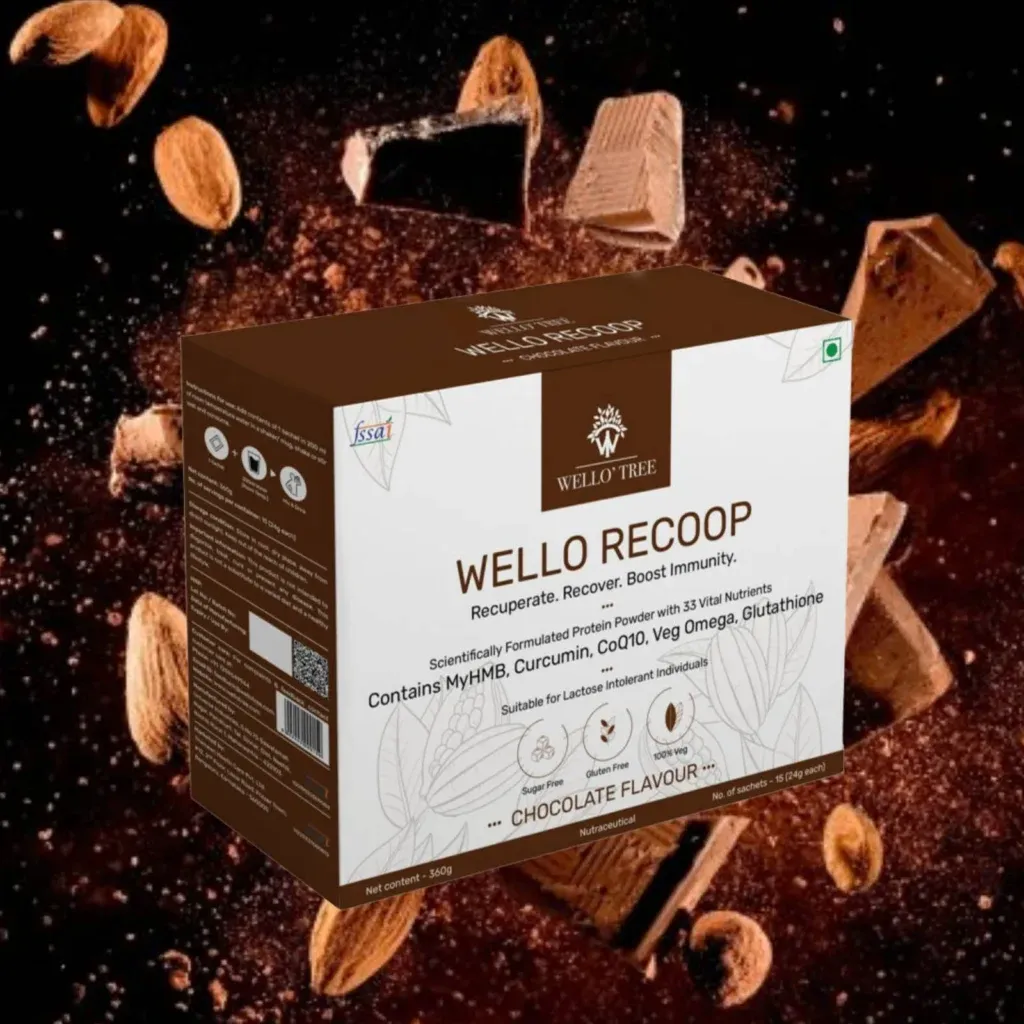
Wello Recoop is a diabetic-friendly, sugar-free recovery protein formulated with whey, pea, and brown rice protein plus HMB, CoQ10, curcumin, and probiotics.
Why Gym Protein and Recovery Protein Are Not the Same Thing
A 28-year-old gym-goer taking whey protein is trying to add lean mass on top of a functioning, well-nourished body. The baseline is healthy muscle, adequate caloric intake, and regular progressive exercise. Protein in that context is fuel for growth.
A 65-year-old post-surgical patient is in an entirely different physiological situation. Their body is in a catabolic state, actively breaking down muscle to fuel wound healing and immune response. They likely have reduced appetite, altered gut function, and are taking multiple medications. Their goal is not to add muscle — it is to not lose the muscle they have, while supporting repair.
That difference in goal should translate directly into a difference in formulation. But most products on the market were not designed with the second patient in mind.
The Ingredients That Actually Matter for Surgical Recovery
Protein source and quality
Whey protein has the best clinical track record for post-surgical recovery because of its complete amino acid profile and high leucine content. Leucine is the amino acid most directly responsible for triggering muscle protein synthesis — and it matters enormously in catabolic states. Whey isolate specifically is lower in fat and lactose than concentrate, making it better tolerated when the gut is recovering.
For vegetarian patients, a blend that combines whey with plant proteins — pea protein and brown rice protein are the two most clinically studied — is preferable to plant-only. The reason is amino acid coverage: pea protein is higher in lysine than most plant sources but lower in methionine; brown rice fills that gap. Together they approximate a more complete amino acid profile. This is why dual-source or triple-source blends exist.
HMB — the compound most people have never heard of
Beta-hydroxy beta-methylbutyrate, or HMB, is a metabolite of leucine. In multiple clinical trials — particularly in elderly and post-surgical populations — HMB has shown specific ability to reduce muscle protein breakdown during catabolic states. This is a meaningfully different mechanism from protein itself: protein provides the raw material; HMB reduces the rate at which the body dismantles muscle tissue. A product formulated for recovery should include it. Very few do. HMB Supplement Benefits
Antioxidant support
Surgery generates significant oxidative stress. The inflammatory cascade that follows even routine procedures produces reactive oxygen species that can slow wound healing and contribute to fatigue. A recovery-oriented formula should address this — which is why ingredients like glutathione and CoQ10 matter. Glutathione is the body’s primary endogenous antioxidant; CoQ10 supports cellular energy production. These are not optional additions. They are relevant to the physiological context.
Digestive support
Many post-surgical patients are on antibiotics, have reduced gut motility, and experience constipation or loose stools in the first weeks at home. Probiotics and digestive enzymes in a recovery formula are not marketing additions — they affect whether the protein actually gets absorbed. A product that delivers 25 grams of protein but cannot be absorbed due to compromised gut function delivers far less than it claims.
What to Avoid in a Post-Surgery Protein Powder
Added sugar is the first issue. Some whey products marketed at medical stores contain maltodextrin, glucose syrup, or sucrose to improve taste. For diabetic patients — and a significant proportion of post-surgical patients in India are diabetic — this is actively harmful. For any patient, it adds caloric load without nutritional value.
Artificial sweeteners deserve scepticism too. Sucralose in particular has been associated with altered gut microbiome composition in some research, which is exactly the wrong direction for a patient whose gut is already stressed. A formula sweetened with stevia or naturally flavoured is preferable.
High sodium formulations are another concern. Patients on cardiac medication or with hypertension have sodium limits that a high-sodium supplement can easily breach. Check the label — a recovery protein should not contribute meaningfully to sodium load.
Finally, look at manufacturing certifications. In India, this means FSSAI licence at minimum. ISO 22000 and WHO GMP certifications indicate the facility meets international food safety manufacturing standards. This matters because what the label says should actually match what is in the product — which is not a given in the Indian supplement market.
How to Read the Label Before You Buy
Protein per serve is the headline number, but it is not the only one that matters. Look at the protein percentage of total serving size: a product that claims “25 grams of protein” from a 60 gram serving has a much higher filler content than one that delivers 25 grams from a 35 gram serving. The difference is usually carbohydrate fillers, cheap oils, or flavouring agents.
Check whether HMB appears specifically on the label as a distinct ingredient, not just as a claim that the product “supports muscle recovery.” Lots of products make that claim on packaging without including the ingredient that clinical evidence actually supports it. The ingredient list does not lie the way the front-of-pack claims sometimes do.
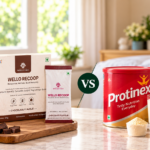
Wello Recoop is a useful reference point here — not because it is the only option, but because it illustrates what a recovery-specific formula looks like. It includes whey isolate plus pea and brown rice protein for complementary amino acid coverage, HMB for anti-catabolic support, glutathione, CoQ10, curcumin, probiotics, digestive enzymes, and a complete vitamin-mineral matrix — all without added sugar, and manufactured under WHO GMP and ISO 22000 certification. That combination reflects what the physiology of surgical recovery actually demands.
A Practical Decision Framework for Families
When a family member is discharged post-surgery and you are looking for a protein supplement, ask three questions. Does it contain HMB? Is it diabetic-friendly with no added sugar? Is it manufactured under FSSAI and preferably WHO GMP standards? If the answer to all three is yes, you have narrowed your options considerably to products that were designed for this context rather than adapted from a fitness purpose.
And regardless of what supplement you choose — confirm the dose and duration with the treating physician or a registered dietitian. A protein supplement is a tool. Used in the right context, in the right amount, at the right time, it meaningfully supports recovery. Used without a nutritional plan, it is a fairly expensive powder.
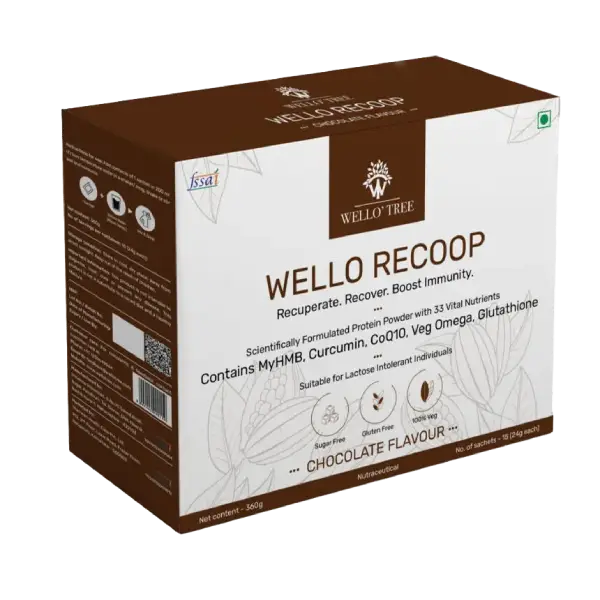
Available in Chocolate and Mango flavours
FAQs
Look for whey isolate or a blend of whey with plant proteins, HMB (beta-hydroxy beta-methylbutyrate), no added sugar, digestive support (probiotics or enzymes), and manufacturing certifications such as FSSAI, ISO 22000, or WHO GMP. Avoid products with maltodextrin, glucose syrup, or artificial sweeteners.
Regular whey protein provides protein but typically lacks the anti-catabolic compounds (like HMB), antioxidant support, and digestive aids that post-surgical patients specifically need. It is not harmful, but it is not optimised for a recovery context. A clinically formulated recovery protein is a more appropriate choice.
This depends on your total dietary protein intake. The goal for most post-surgical adults is 1.2 to 1.5 grams of protein per kilogram of body weight per day. Calculate how much your food provides and use the supplement to fill the gap. Always discuss the dose with your doctor or dietitian.
Yes, provided the product contains no added sugar, maltodextrin, or glucose syrup. Many vegetarian patients with diabetes are precisely the people who need supplemental protein during recovery. Choose a product specifically labelled diabetic-friendly and confirm with the treating physician.
Most clinical guidelines support supplementation for at least four to six weeks post-operatively, or until the patient can consistently meet protein targets through diet alone. The critical window is the first two weeks, when catabolic loss is highest and appetite is lowest.