




There is a widespread belief among Type 2 diabetic patients in India that protein is something to be cautious about — that higher protein intake somehow threatens blood sugar control or kidney function. I hear it regularly in consultations: “Doctor said limit my food, so I am eating less of everything.” Or: “I read protein is hard on the kidneys, so I avoid it.”
This is partly a misapplication of advice that does apply in a specific, narrow context — advanced diabetic kidney disease, where protein restriction is genuinely clinically indicated. For the vast majority of Type 2 diabetic adults managing with diet and oral medication, the fear of dietary protein is misplaced and is probably causing harm by leaving patients under-muscled, more insulin resistant, and more metabolically vulnerable than they need to be.

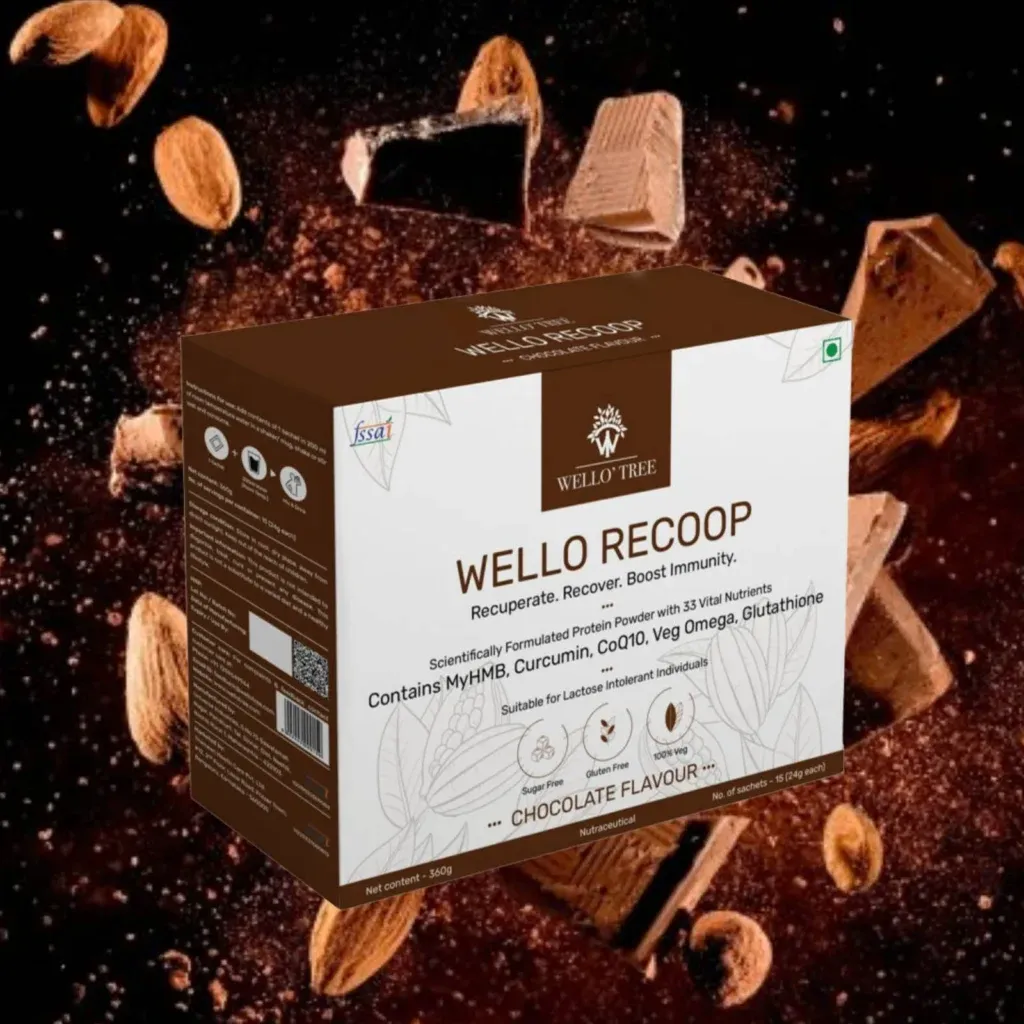
Wello Recoop is a diabetic-friendly, sugar-free recovery protein formulated with whey, pea, and brown rice protein plus HMB, CoQ10, curcumin, and probiotics.
What Protein Actually Does to Blood Glucose
Protein has a gluconeogenic potential — the liver can convert amino acids to glucose, which is a factual point that likely feeds the caution. But the clinical reality is more nuanced. Protein consumed as part of a mixed meal does not produce a meaningful acute glucose spike in most Type 2 diabetic patients. The gluconeogenic conversion of amino acids is a slow process that does not drive the kind of post-meal glucose excursion that carbohydrates do.
More importantly, protein consumed instead of carbohydrate at a meal — substituting protein-rich dal for extra rice, or replacing a carbohydrate snack with paneer — produces significantly lower post-meal glucose responses than the carbohydrate equivalent would have. The comparison that matters is not protein versus nothing. It is protein versus the carbohydrate that would otherwise be eaten.
And protein is clearly superior in that comparison.
The Satiety Effect: Why Protein Helps Glycaemic Control
Protein is more satiating per calorie than either carbohydrate or fat. This matters enormously for diabetic patients managing weight alongside glycaemia. Higher protein meals reduce hunger over the subsequent hours, reduce the likelihood of snacking on high-glycaemic foods between meals, and support better portion control at subsequent meals.
Studies consistently show that higher protein dietary patterns are associated with improved HbA1c, better body weight management, and better preservation of lean muscle mass in Type 2 diabetic patients. In elderly diabetic patients specifically, where sarcopenia is an additional major concern, the case for adequate protein becomes almost unassailable — the muscle loss that comes from protein restriction compounds an already serious problem of age-related muscle decline. Sarcopenia in Elderly Indians
The Insulin Response to Protein: What It Means and What It Doesn’t
Protein does stimulate some insulin secretion — less than carbohydrate, but measurable. This is not a problem for most diabetic patients. Insulin is not the enemy; inadequate insulin response to carbohydrate is the defining feature of Type 2 diabetes. The modest insulin stimulus from protein does not create hypoglycaemic risk in patients on oral medication alone (the exceptions are patients on sulfonylureas, where additional consideration applies, and those on insulin therapy, where protein’s delayed glucose effect may need to be accounted for in bolus timing).
For the majority of Type 2 diabetic patients managing without insulin, the insulin response to protein is modest and clinically benign. Telling these patients to restrict protein to manage blood sugar is not supported by evidence.
The Kidney Question
The kidney restriction concern is real in a specific population: patients with established diabetic nephropathy, where eGFR is significantly reduced and protein is restricted to reduce the filtration burden. The typical clinical threshold for protein restriction is eGFR below 30-45 mL/min/1.73m2, depending on the guideline and clinical assessment.
For the overwhelming majority of Type 2 diabetic patients — those with normal or mildly reduced kidney function — there is no clinical basis for protein restriction. The advice to limit protein based on a diabetes diagnosis alone, without nephropathy, is not evidence-based. A nephrology consultation and kidney function testing — eGFR and urine protein — should precede any decision to restrict protein in a diabetic patient.
I want to be clear about this because it is a point where clinical evidence and common patient behaviour are significantly misaligned.
Practical Protein Sources for Diabetic Indians
The best protein sources for Type 2 diabetic patients are those that provide complete or near-complete amino acid profiles with minimal carbohydrate load. Eggs, paneer, curd (especially unsweetened, full-fat dahi), sprouted legumes, and soya are all appropriate. Whey protein, in no-added-sugar formulations, has a well-established place in diabetic nutrition — it has a low glycaemic impact and has been shown in several studies to improve post-meal glucose responses when taken alongside a carbohydrate-containing meal.
Wello Recoop is formulated without added sugar with diabetic patients specifically in mind — the no-added-sugar design, combined with multi-source protein and a broad micronutrient base, makes it usable for diabetic elderly patients who need protein supplementation without glycaemic consequences. Nutrition Supplements for Elderly Indians
Protein Distribution Through the Day
For diabetic patients specifically, distributing protein evenly through the day — rather than concentrating it at dinner — has an additional benefit beyond the muscle synthesis argument. Protein at breakfast in particular appears to reduce post-breakfast and even post-lunch glucose excursions, likely through effects on gut hormone secretion and early-meal satiety signals.
A high-protein breakfast — scrambled eggs, paneer on a multigrain roti, or a no-sugar protein supplement — is a straightforward intervention that many diabetic patients are not taking advantage of because their morning meal is typically carbohydrate-dominant (idli-sambar, poha, upma). These are not bad foods, but the protein component needs deliberate addition, not assumption.

Available in Chocolate and Mango flavours
FAQs
Not significantly in most cases. Protein has a gluconeogenic potential, but the conversion of amino acids to glucose is slow and does not produce acute post-meal glucose spikes comparable to carbohydrates. Replacing carbohydrate with protein at a meal typically lowers rather than raises post-meal glucose.
Not as a general rule. Whey protein in no-added-sugar formulations has a low glycaemic impact and has been shown in clinical studies to support better post-meal glucose management when taken alongside carbohydrate-containing meals. Patients with advanced diabetic kidney disease should consult their nephrologist before increasing protein intake.
Yes. Protein restriction in diabetes is indicated specifically for patients with established diabetic nephropathy and significantly reduced kidney function (typically eGFR below 30-45). For the majority of Type 2 diabetic patients with normal or mildly reduced kidney function, adequate protein intake — 1.0-1.2 g/kg/day — is safe and clinically beneficial.
Eggs, paneer, unsweetened curd, sprouted moong and chana, soya chunks, and thick dals (toor, masoor, chana) are the most protein-efficient options in the Indian kitchen with low glycaemic impact. Avoid sweetened dairy products, deep-fried protein preparations, and high-carbohydrate dal preparations where the lentil proportion is minimal.
Yes, with appropriate product selection. Elderly Type 2 diabetic patients often have both sarcopenia risk and glycaemic management needs. No-added-sugar, high-protein supplements are appropriate for this population, and the combination of adequate protein and maintained muscle mass is beneficial for insulin sensitivity itself. Inform the treating physician and diabetologist of any supplementation.





Leave a Reply
You must be logged in to post a comment.